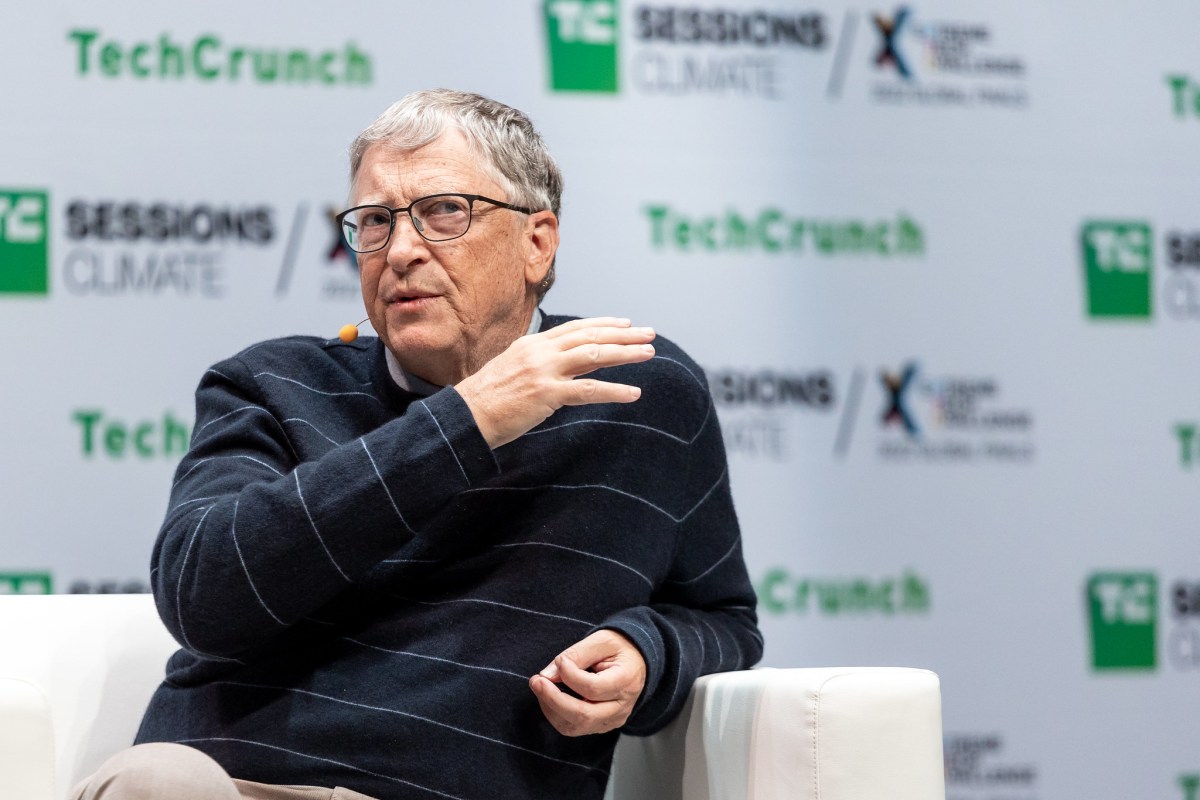
Why is Bill Gates talking about a robot tax now?
In a recent essay on Gates Notes, Bill Gates waded back into one of the thorniest questions in tech: what happens to human labor as AI and automation accelerate. His answer includes an idea he has floated before but now frames with more urgency — the Bill Gates robot tax, paired with a newer concept he calls "Human Reserved" jobs. For anyone building or deploying AI systems, this is worth reading closely, because the policies he describes would reshape the economics of automation itself.
Gates also signaled skepticism about the so-called "Pacing the Frontier" letter calling for a voluntary AI slowdown. In other words, he doesn't believe the industry will hit the brakes on its own. If a pause won't happen through goodwill, his argument goes, then the incentives need to change through policy.
What exactly is the Bill Gates robot tax?
The core of the proposal is deceptively simple, and it starts with how our tax code already works. As Gates points out, the current system quietly rewards replacing people with machines. When a business hires a person, it owes payroll taxes on that person's earnings. When it buys a robot, it can usually deduct that purchase as a business expense right away. The math nudges decision-makers toward automation before they've even weighed the human cost.
Gates put it this way:
"Right now, if you’re an employer and you hire someone, you pay payroll taxes on their earnings. But if you buy a robot, you can usually write it off right away as a business expense. The tax system nudges you toward replacing people with machines. A tax would slow the rush away from human labor a little and raise money for retraining and a stronger safety net."
A robot tax, then, would do two things at once. First, it would add friction — not a wall, just enough of a cost to make automating a role a more deliberate decision rather than a reflex. Second, it would generate revenue earmarked for worker retraining and a sturdier social safety net, the very programs people need most when their jobs disappear.
For technical teams, this reframes automation as a budgeting question with a public-policy dimension. If you're evaluating whether to replace a workflow with an AI agent, a robot tax would put a number on the labor you're displacing. That doesn't kill automation; it just forces the return-on-investment case to account for costs currently borne by society.
What are "Human Reserved" jobs?
The second half of Gates's proposal is more provocative. He suggests designating certain roles as "Human Reserved" — categories that would be off-limits to full AI takeover, for both economic and ethical reasons.
On the economic side, the logic is about protecting people who can't easily pivot. Gates offered a blunt example:
"We might set something aside as Human Reserved for economic reasons. For example, we may do it because allowing machines to take over a certain role will displace a large number of people who can’t easily change jobs. You can’t tell a 55-year-old who has worked in construction their whole career that they need to go work at an elder care facility and expect them to find it fulfilling."
On the ethical side, he drew a hard line around high-stakes human moments. Gates argued, for instance, that a machine should never be the one to deliver a fatal medical diagnosis to a patient. Some interactions carry a human weight that automation can't and shouldn't absorb.
Crucially, he isn't asking for a permanent freeze. His recommendation is to phase AI into these reserved sectors slowly — over the span of decades rather than quarters — so that workers, institutions, and communities have time to adapt.
How would this affect AI labs and the broader industry?
Here's where the proposal gets teeth. Both measures — a robot tax and job categories set aside for people — would push against the economics that currently make rapid automation the cheaper option. Automation revenue depends on speed and scale; a tax slows the first and reserved-job designations cap the second. That collision of interests is exactly why this debate matters far beyond a single essay.
If you're a technology professional, the practical takeaway isn't to panic or to dismiss the idea as unworkable. It's to recognize that the economics of AI deployment are not fixed. The reason automation looks so attractive today is partly a policy artifact — a tax code written for a pre-robot economy. Change the code, and the calculus changes with it.
This is also a useful lens for product strategy. Tools that augment people tend to age better than tools designed purely to eliminate them, both reputationally and, potentially, legally. When we think about how our own templates and AI features fit into a team's stack, we lean toward augmentation — and it's worth comparing approaches before committing to a fully autonomous pipeline. If you want to build responsibly, our documentation on agent workflows is a good place to see where human oversight belongs.
Is a robot tax actually realistic?
Skeptics have fair points. Defining a "robot" is genuinely hard — is a spreadsheet macro a robot? A recommendation model? A warehouse arm? Any tax needs a clear line, and software resists clean lines. There's also the classic worry that a robot tax slows innovation or pushes development to jurisdictions without one.
But Gates's framing sidesteps the purity trap. He isn't promising a perfect policy; he's arguing for a small correction to an incentive that currently points hard in one direction. Even a modest tax that funds retraining could soften the transition for millions of workers, and even a narrow set of Human Reserved roles could preserve dignity in the moments that matter most.
Conclusion
Whether or not you agree with the specifics, the Bill Gates robot tax proposal is a serious attempt to answer a question the industry keeps deferring: who pays when automation moves faster than people can adapt? Gates's dual plan — a tax to fund retraining and reserved jobs to protect the most vulnerable — puts humans at the center of the AI economy rather than treating them as a line item to eliminate.
If you're building products with AI, you don't have to wait for legislation to design with people in mind. Explore how a human-first approach shapes the tools we build, and download a template that keeps you in control of your own automation.